Search mental health services and support options.
Get immediate support in a crisis or urgent situation.
Understand your options and where to start.
Support a friend, family member, or loved one.
Find peer support and connect with people who understand.
Find help and resources for yourself or someone at risk.
Explore the support that's available and find what fits you.
Browse mental health topics and terms from A to Z.
Everyday ways to look after your mental wellbeing.
Understand how autism and mental health connect.
Explore the treatment and therapy options available.
Learn about different conditions, their signs, and support.
Who is Finding North?
See the people behind.
Donation to us via PayPal
About Finding North Network
Our project.
The latest news, updates, and upcoming events.
Learn about peer support and lived-experience work.
Information and resources to support your recovery.
Browse articles, tools, and resources in one place.
Find help and resources for yourself or someone at risk.
Browse the directory or apply to join.
Practical guides to help you navigate mental health.
Know the laws that protect you and your rights.
The standard of care you can expect to receive.
Get support to speak up and be heard.
Your fundamental rights in mental health care.
Understand your rights when accessing care.

A post-traumatic stress response is both completely human and expected after witnessing a distressing event. The difference between a normal stress response and PTSD (Post Traumatic Stress Disorder) is the severity at which it is experienced (and the degree to which it impacts daily living) and the duration for which it persists.
Post Traumatic Stress lasts longer than a month – sometimes years – or may not show up until months or years after the event has occurred. It can significantly disrupt a person’s day-to-day life (their job, relationships, health, general enjoyment etc.), and can occur at any age, ethnicity, nationality or culture.
PTSD is often seen in people who have experienced, witnessed, or encountered oppressive or inhumane environments such as war zones, unsafe relationships, abusive households, emergencies and natural disasters.
Classic depictions of PTSD typically centre around bereavement and war-time, however these are not the only experiences that may be ‘traumatic’
What is considered traumatic is in itself highly subjective. Different people will have different responses to the same or similar situations, meaning an experience that might be traumatic for one person may not necessarily be for another person.
Trauma is a much more diverse concept than we typically understand it to be.
And an endless list of other experiences. There is no ‘look’ to trauma, it is very personal and ill-defined. What one person considers traumatic may not be traumatic to another, and that doesn’t make it any less valid.
The story I will share is my own, a story of a 30 something year old woman, living with Complex PTSD.
Signs and symptoms of PTSD are highly variable, and may not always appear in the ways that we might typically expect. For some, symptoms may be highly evident and impact daily functioning. Others may experience only a few symptoms and may be able to participate in daily living relatively ‘normally’. Others may be unable to sleep and may experience flow-on effects as a result of this.
There’s no simple explanation for what causes PTSD. However, lots of different things might play a role, including:
On top of these things, the person is more likely to develop PTSD if they don’t get any or very little social support after the traumatic event or they experience other challenges in life.
Complex PTSD, or C-PTSD, is a form of PTSD typically a response to a repeated, prolonged exposure to an environment that is considered traumatic.
People with C-PTSD often experience a number of additional symptoms that may not be present for people who have experienced one major trauma.
Many of the symptoms of complex PTSD are similar to those of bipolar – in which a person can experience extreme states of mania and of depression. Bipolar and C-PTSD share some common symptoms, including mood swings, hopelessness, difficulty concentrations, irritability and sleep disturbances.
The first port of call in seeking treatment for mental ill-health (when a person hasn’t already got a support team on board) is often to touch base with a general practitioner. Though they cannot make a diagnosis, they usually have pathways into services better equipped to provide specialised support. This is usually in the form of a referral – which may require a written letter to a psychiatrist.
Only a psychiatrist can make an official PTSD diagnosis.
To be diagnosed with PTSD, the symptoms must last more than month, and the symptoms must be severe enough to cause a lot of distress and making it very hard to do daily tasks and enjoy life. Many people who diagnosed with PTSD say was a relief to receive a diagnosis, because they could finally understand what was happening to them, and they could get the appropriate treatments.
Explore different treatments, therapies and support options to better understand what’s available and find the approaches that work for you and your wellbeing.
According to the National Study of Mental Health and Wellbeing 2020–2022, an estimated 11% of Australians experience PTSD in their life (lifetime prevalence), with women being at almost twice the risk of men (14% and 8%, respectively) (ABS 2022).
There are a number of professionals who can help treat PTSD, including GPs, psychiatrists, psychologists, social workers and occupational therapists. They offer a variety of ways to help manage symptoms.
Psychologists are considered ‘experts in human behaviour’. They help people understand the way they feel and behave and manage challenges that they are facing.
Psychiatrists have a medical qualification but specialise in mental health. They are able to make diagnoses, prescribe medication, and oversee treatment plans.
General practitioners are often the first point of contact – they typically will assess a person’s mental health. They may also be able to diagnose and prescribe medications.
Social workers meet professional standards laid out by the Australian Association of Social Workers. They can provide counselling, support, and a more holistic model of care. They also help people connect within their community and may work in multidisciplinary teams.
Occupational therapists assist in the day-to-day activities of people experiencing health challenges. They help a person to develop skills and self-care strategies
Peer workers have lived experience of mental ill health and work from a place of mutuality and humanity to relate to, support, and guide a person through their own mental health challenges.
Treatment for any mental health condition is not a one-size-fits-all. It is highly individual. It is also not realistic to expect a ‘cure’.
Recovery can be a challenging term for some, as in itself this is defined as a ‘return to a state that once was’. The truth is, people are always growing and changing, and perhaps a person might not desire to return to the life that they had. For others, the word recovery is full of hope and has no negative connotations. This in itself attests to the fact that mental health treatment and recovery is so individual.
In the case of ‘recovery’ from PTSD, the aim is usually to improve one’s ability to cope with symptoms, reduce their frequency, and show the person new ways to deal cope. It is key to note that a the trauma a person has experienced will never be ‘erased’, and it should not be the goal to achieve this. For that matter, the goal should always be led and directed by the wishes of the person themselves.
These options may be short or long-term and may include psychotherapy (talking therapy), medicines, lifestyle changes, and education about PTSD and mental wellbeing.
With all approaches, the aim is to improve symptoms, show the person new ways to deal with their PTSD symptoms and how to feel better about themselves.
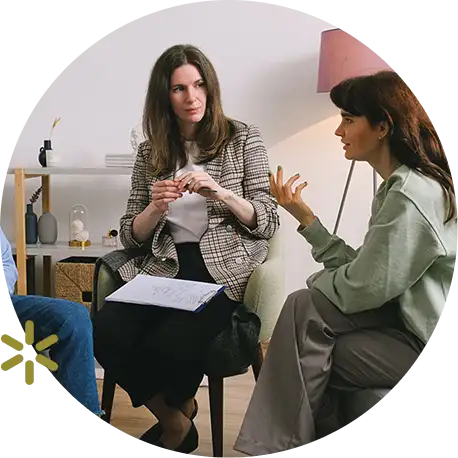
Talking with a therapist, whether alone, with family members or in group therapy, is usually the first place to start and is often very helpful for people diagnosed with PTSD. The aim of ‘talking’ therapy is to change the person’s thinking patterns and find new ways for them to respond to their trauma and symptoms.
Medicines may be recommended if psychological therapies on their own are not enough. There are many types of medications to help with the different symptoms and side effects of PTSD. The one (or combination of medications) that works best will vary from person to person, depending on the areas the person most needs help with. It can take time to find the right medication and the right amount that works.
The results of PTSD medications also vary, at times getting rid of all symptoms, while at other times only make symptoms less intense and easier to manage. Medication can also have side effects, which should always be reported to the GP or other health professional who prescribed it.
When used in conjunction with the above options, other approaches which may help when experiencing PTSD:
• massage
• meditation
• breathing exercises
• listening to music
• participating in craft and hobby groups
• taking up a sport
• eating healthy food
• avoiding alcohol
• getting enough sleep
They can all make a big difference.
Following a diagnosis of PTSD, it may be helpful for the person to learn as much as they can about the illness. Reading websites like this one, listening to podcasts, requesting information sheets from health professionals, and talking to health professionals, talking with other people with PTSD either through support groups or online forums, can give the person a broader understanding.
Help is available and there are a number of ways to find it. If one of the following avenues doesn’t work, it’s worth trying another until you find the right support.
A GP is the first person to see before you can see a psychologist or psychiatrist. Many GPs have their own website these days which gives information about their personal or team’s expertise and interests. This can be useful when choosing a doctor who has experience with people with PTSD.
The GP then writes write a referral letter to a psychiatrist or psychologist, if this type of support is wanted. When necessary, the GP will prescribe medication to help with symptoms, and in this case the GP may want to see the person regularly to monitor their health.
The symptoms of PTSD are really hard to live with, especially if the person is trying to cope on their own. For some people, it can be hard talking about the difficulties they’re experiencing, but telling someone could bring huge relief, making them feel less alone. This doesn’t have to be a medical person. Sometimes talking to a family member, friend or colleague is a good place to start.
The best place to start seeking treatment for post-traumatic stress disorder is a GP who can then refer to a clinical psychologist or psychiatrist.

The psychological treatments in this handout are the recommended evidence-based (or, ‘first line’) treatments found to be effective to treat people with PTSD. Designed to help you to decide which you would prefer.

Each week the Life After PTSD Podcast shares stories of about creating a Life After PTSD.

SANE offers a range of free digital and telehealth support services for people over 18 years of age with complex mental health needs, and their family, friends and carers. We also provide mental health support to people with intellectual disability, autism or acquired brain injury.
Finding North is hosted by Mental Illness Fellowship of Australia (MIFA). MIFA acknowledges the Traditional Owners of the Country throughout Australia and their continuing connection to land, sea and community. We pay our respect to them and their cultures and to the Elders past and present. We recognise and value the expertise of people, families and carers with living experience of mental health challenges. We uplift and amplify marginalised voices to create a more inclusive future for all.